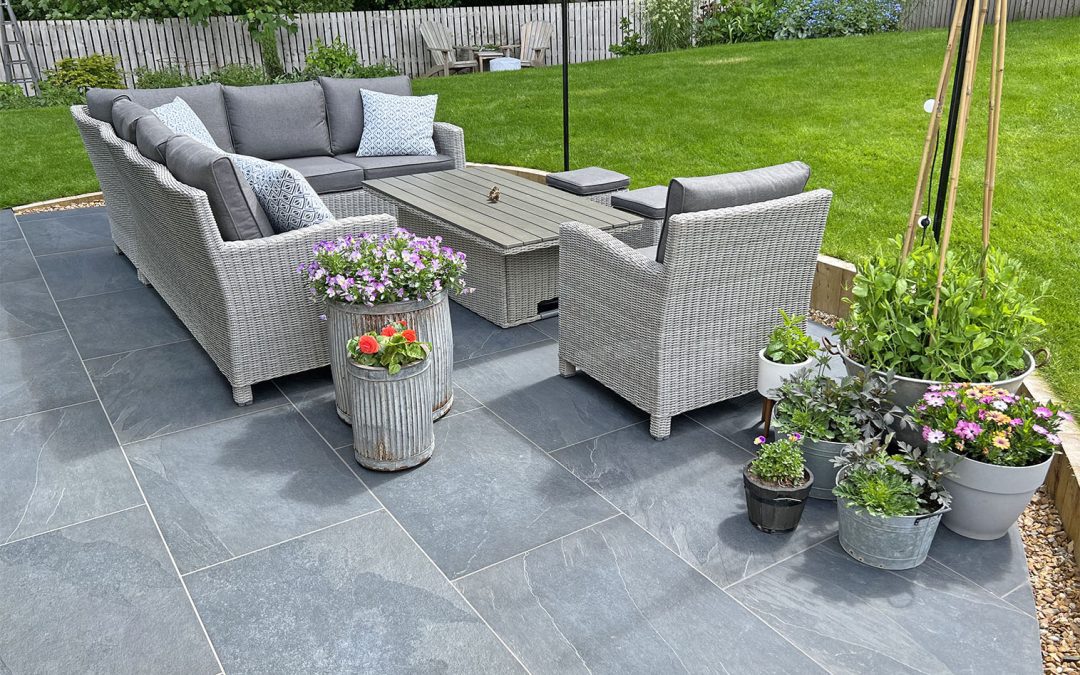
Last year saw a significant shift in external porcelain, with engineered slabs dominating market growth. Once a niche product, these pavers have become a top choice for external patio installations, especially in more contemporary settings – and deservedly so. They’re exceptionally durable and resistant to stains, frost and fading. Being dense and low-porosity, they absorb very little moisture, so they stand up brilliantly to heavy foot traffic and our increasingly extreme weather conditions. But, whilst they’re low maintenance, they are not ‘self-cleaning’. Dirt, organic matter, algae and everyday grime will still accumulate on the surface of the tile – particularly in damp and shady spots. To maintain performance features, a regular maintenance regime is really important – and spring is the best place to start.
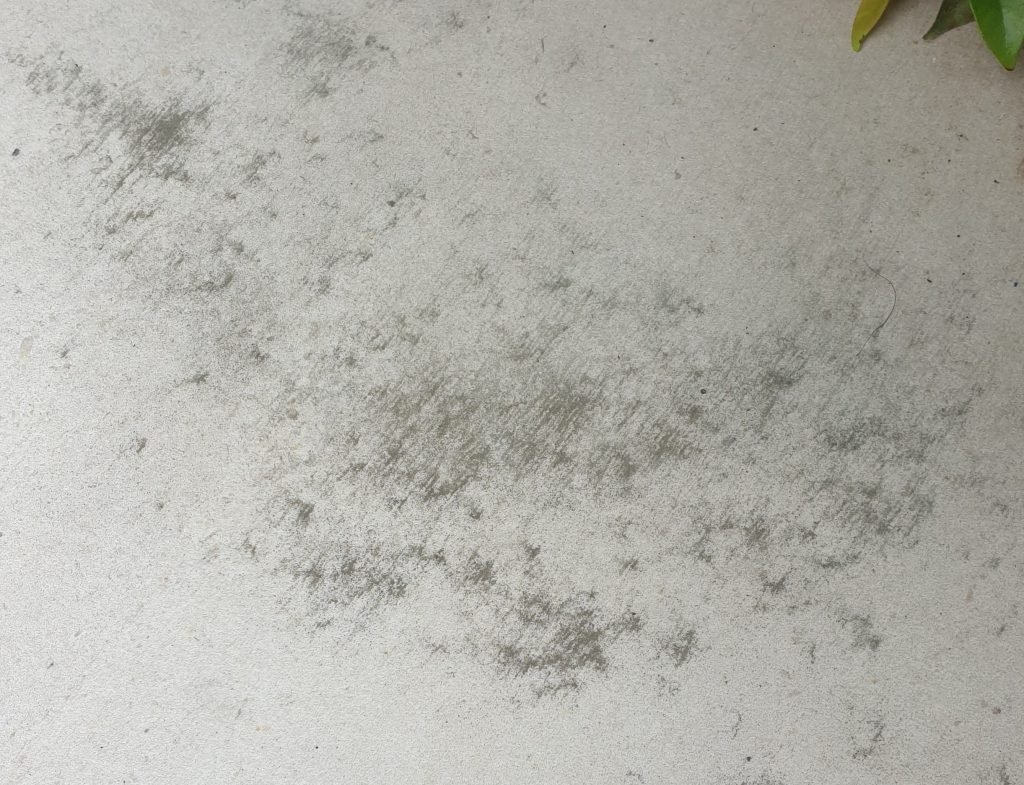
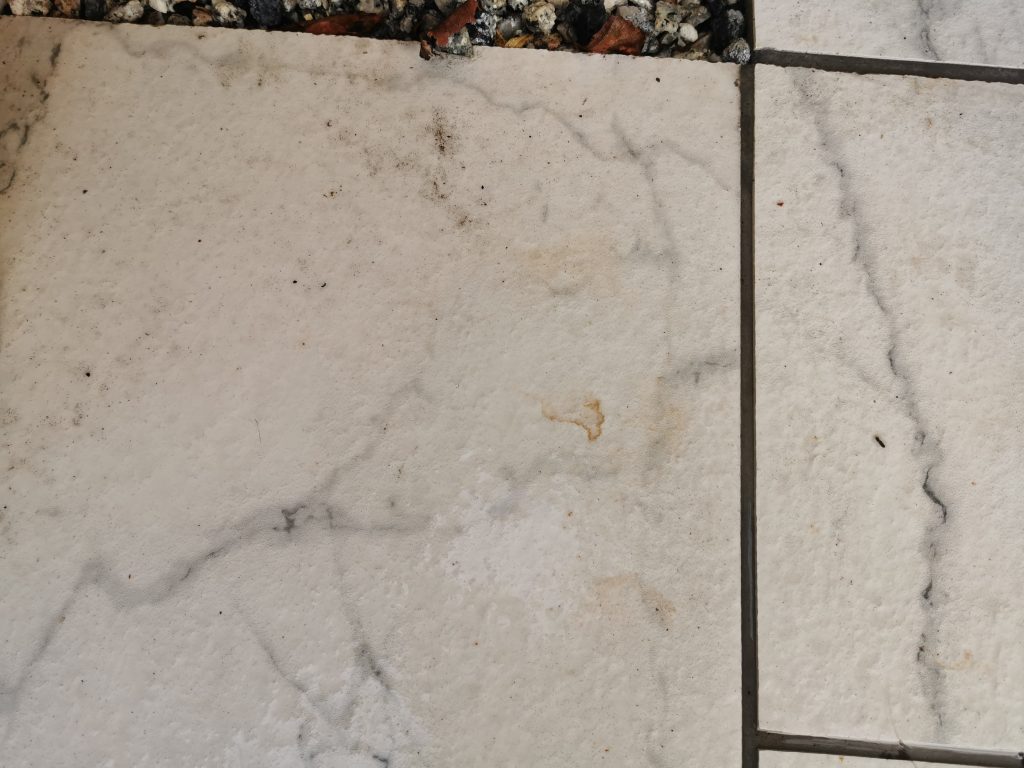
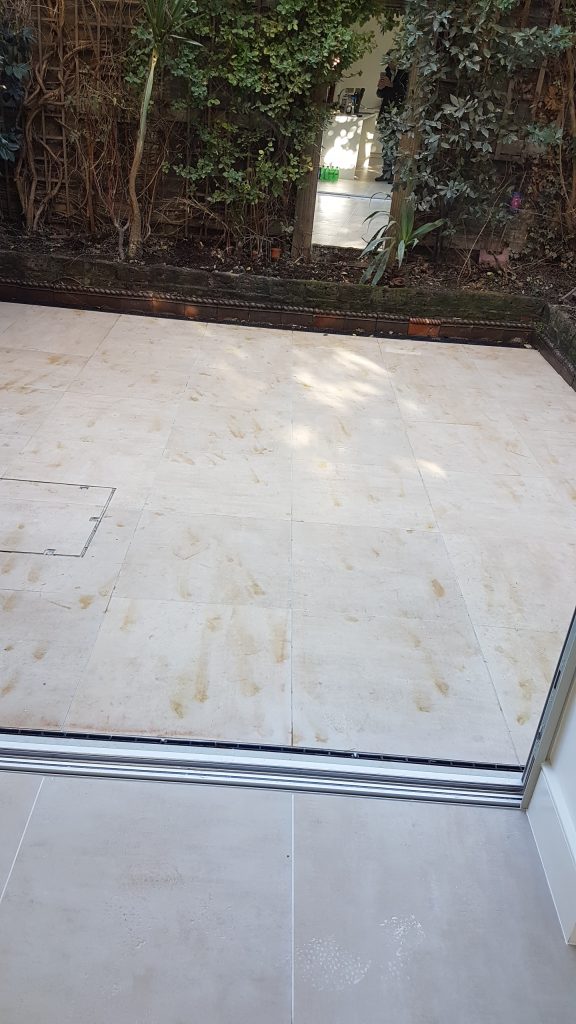
Algae, rust and tannin stains on porcelain pavers
Cleaning porcelain pavers
As a general rule of thumb, it’s worth cleaning porcelain paving every couple of months over the spring/summer and twice during the autumn/winter. Surfaces that are regularly cleaned will be far easier to keep clean. Regular cleaning of inside-to-outside tiles, like those that run through bifold doors, will also help maintain a seamless aesthetic.
Jet washing may seem like the best method for a fast clean but it will only wash dirt off the surface of the pavers. This will leave residue lodged in the tile’s textured surface which will, in turn, attract more dirt and residue. The only way of reaching this is to use an alkaline-cleaner, like ECOPROTEC Intensive Cleaner and to allow sufficient contact time to break down the accumulated matter.
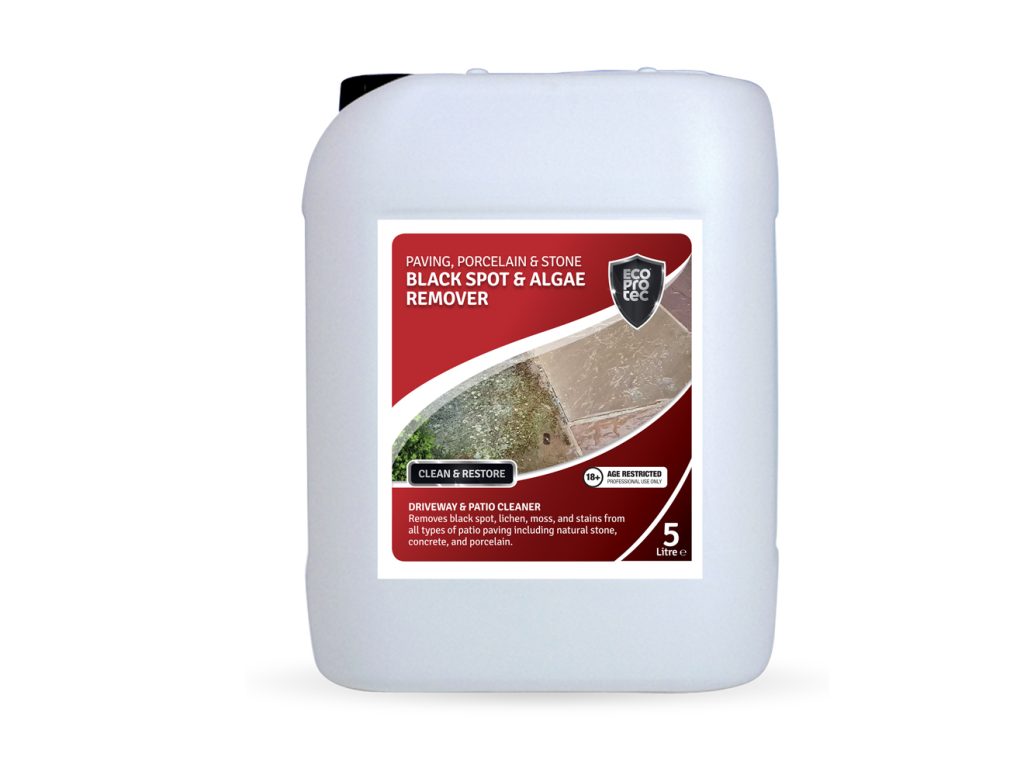
If the build-up comprises slippery green slime and organic residue, ECOPROTEC Black Spot & Algae Remover will provide the most thorough clean and will help prevent regrowth; the contact time for this type of treatment will generally be longer, in order to target the algae’s hyphae or filaments which will be anchored into place. Acidic solutions should, however, be avoided. Whilst porcelain is acid-resistant, cementitious grout joints are not. Other stains, like cement, grout, efflorescence, wax, polymer, epoxy and rust are best tackled with a specialist ECOPROTEC stain remover formulated to remove these residues.

Recommendations for new installations
External porcelain pavers don’t need to be sealed but their textured finish can create a challenge during installation. Grout and brush-in joining compounds tend to get stuck in the tile’s high/low surfaces, along with general dirt and residue. This creates a white film on the surface of the tile and this loss of texture can compromise slip resistance. Applying ECOPROTEC Pre Grout Protection before grouting will help protect the surface of the tile from cement and resin staining during installation. It will also help to improve and increase the working time of the grout or jointing compound, by preventing rapid moisture absorption and keeping it fluid for longer. As an additional bonus, the treatment will leave invisible active ingredients behind which provide protection and make the removal of any residue much easier. Then, once residues have been removed and the surface is dry, a further coat across the face of the tile and the joint will make ongoing cleaning and aftercare easier too.
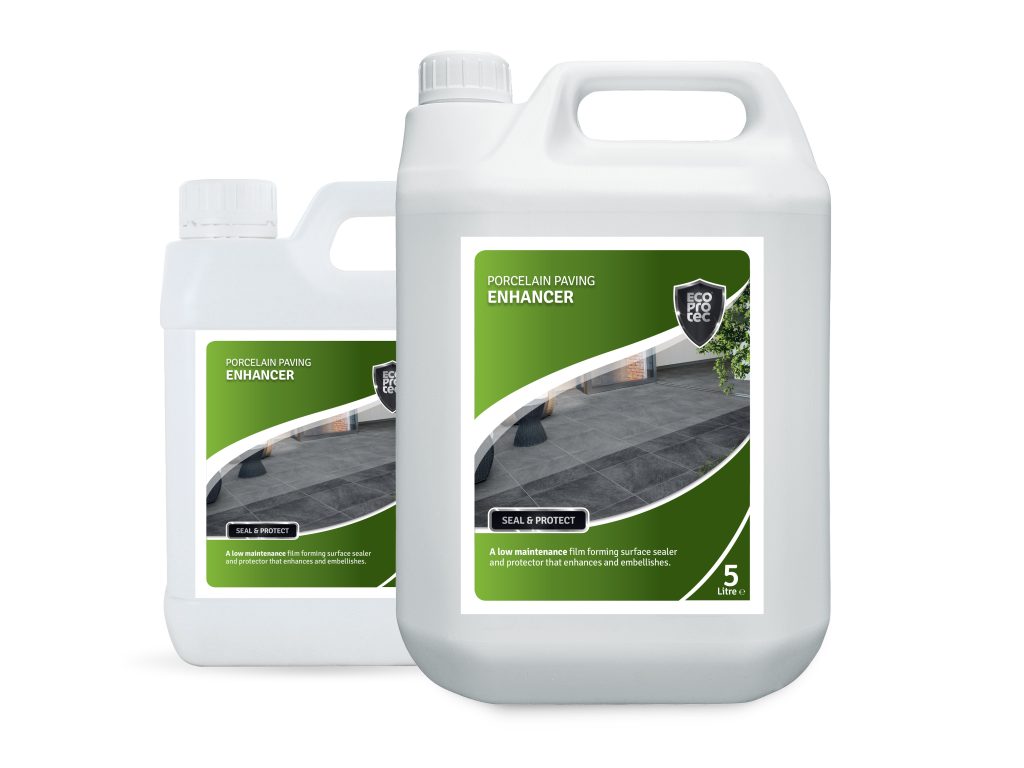
Further resistance to foot traffic, wear and stains can also be added with the application of ECOPROTEC Porcelain Paving Enhancer – a PFAS-free, water-based treatment which creates a sheen or ‘just washed look’ without compromising slip-resistance.
For more advice, browse ECOPROTEC TV on YouTube, contact the ECOPROTEC team direct on 01823 662722 or email technical@ecoprotec.co.uk