Longer daylight hours and warmer weather bring many benefits, but they also coincide with an increase in graffiti vandalism and tagging. The summer months consistently see higher levels of graffiti activity, creating additional challenges for property owners. With incidents continuing to rise year-on-year, effective removal is becoming increasingly important.
Graffiti ‘artists’ tend to use fast-drying, high-pigment aerosol spray paints, permanent markers and bitumen-based paints. All of these are hard to remove from porous surfaces because they penetrate deeply into the material’s pores and form strong, durable chemical bonds with the substrate, acting like a stain rather than a surface coating.
Common urban surfaces, like stone walls, brickwork and concrete, are all porous so they readily absorb graffiti. They’re often sensitive, so strong solvents, alkali or acid cleaning solutions can erode the surface and should be avoided. Other removal methods, like sandblasting or high pressure steam cleaning are abrasive and can cause additional damage to the underlying surface.
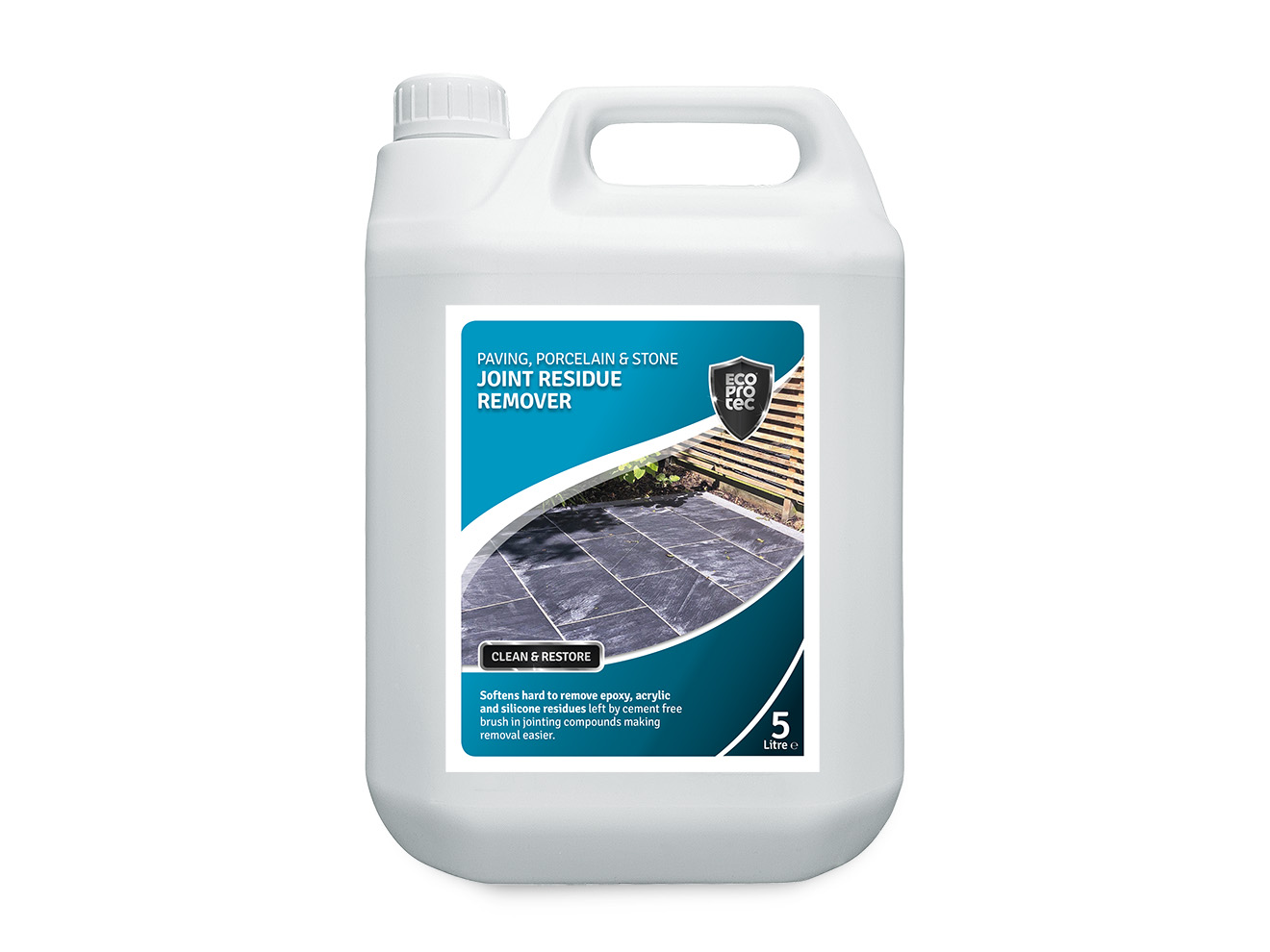
In order to safely remove graffiti from these surfaces, you need to use a non-caustic solution, like ECOPROTEC Joint Residue Remover. The treatment is applied with a paint brush or by dapping with a cloth, in manageable areas of no more than five square metres. It’s important not to brush it out; keep the application generous. The solution should then be left to dwell on the surface for the specified time – generally up to 30 minutes. If the surface starts to dry within this timeframe, apply more treatment. Then, use a stiff brush or an abrasive nylon pad to remove the softened paint and repeat the process if any unwanted material remains. After treatment, wash down the surface with a suitable intensive cleaner – like ECOPROTEC Intensive Cleaner – and rinse with plenty of water, then leave to dry.

After cleaning stone to remove graffiti, we’d normally advise the application of a suitable impregnating sealer that does not alter the natural appearance of the surface that’s being protected. This also helps to make any future clean-up much easier by reducing the risk of absorption.

For more information, contact the ECOPROTEC team direct on 01823 662722 or email technical@ecoprotec.co.uk