As summer draws to a close and autumn arrives, now is the ideal time to give patios, paths and other outdoor hard surfaces some much-needed attention before the colder, wetter weather sets in.
The combination of fallen leaves, increased rainfall and longer periods of damp can all contribute to staining, algae, moss and other organic growth, while existing dirt and debris can become more difficult to remove once winter sets in. Taking some time now to clean and protect outdoor surfaces will make them easier to look after throughout the autumn and winter – and help ensure they’re ready to enjoy again when spring arrives.
Here are our recommendations for getting outdoor spaces autumn-ready, from tackling ingrained dirt and leaf stains, to applying protective treatments.
Establishing an Autumn/Winter routine
Path and patios will benefit from a thorough clean in early autumn, then every couple of months during the winter and three times during late spring/summer. Surfaces that are regularly cleaned will be far easier to keep clean. Regular cleaning of inside-to-outside surfaces, like those that run through bifold doors, will also help maintain a seamless aesthetic.
Before embarking on an autumn clean-up, take some time to prepare the area:
Protect your furniture: identify any furnishings or materials that aren’t winter or frost proof. Pack them away or cover them securely before the weather turns.
Manage your pots: Empty and stack pots as soon as flowers are spent. This makes patio maintenance much easier. Keep in mind that certain delicate pots may need to be stored indoors if they aren’t frost-resistant.
Clear the surface: Sweep pavers thoroughly to remove loose dirt, debris and early fallen leaves.
TIP:
It’s worth sweeping up leaves on a regular basis, as they quickly decay and cause a dangerous slip hazard. Certain leaves, like sycamores, are a particular menace. Aphids that live on the surface of the leaves excrete a sugary substance that provides a food source for algae. The combined mix of sugar and bacteria leaves a tell-tale black spot stain and sometimes whole leaf prints.
A note about pressure washing
A quick blast with a jet wash may seem like an easy way to clean pavers, but it is rarely the best solution. Saturation and prolonged damp conditions actually contribute to staining and slip issues. Jet washing can also loosen grout, erode delicate stone surfaces and ruin any protective sealant previously applied. For ingrained staining and organic matter, a specialist chemical treatment offers a safer, more targeted approach. It draws residue out of the stone’s natural pores and reduces the conditions in which algae and other organic materials regrow.
Cleaning pavers – recommended product & method
To properly remove stains and ingrained dirt from stone and porcelain pavers, we recommend a thorough wash with ECOPROTEC Intensive Cleaner. This treatment is also highly effective at removing leaf stains, including those left by Sycamore leaves.

How to apply ECOPROTEC Intensive Cleaner
- Prep and test: Remove all furniture, pots, and objects from the patio. Always test your cleaning solution on an inconspicuous area first.
- For mild staining: Dilute one part of Intensive Cleaner with 10 parts of warm water. Wash the surface thoroughly, using a heavy-duty brush or yard broom, and rinse with clean water.
- For severe staining: Dilute one part of Intensive Cleaner with 3 parts of warm water. Apply and agitate with a scrubbing brush. Leave to act for 5-10 minutes, adding more solution to keep the surface wet.
- Rinse: Sweep up any residue and rinse thoroughly with clean water.
Tackling organic residue
If your patio is prone to black spot, lichen, moss and slippery algae, we recommend periodic treatment with ECOPROTEC Blackspot & Algae Remover. This breaks down fungal spores and black spot ‘hyphae’ before they can fully colonise the stone.
Early autumn is the perfect time to carry out a treatment, before wetter weather creates the ideal breeding ground for organic growth. This treatment is acid-free, so it’s safe to use on acid-sensitive stone. However, it does contain a bleaching action to remove stains so test first on an inconspicuous area.
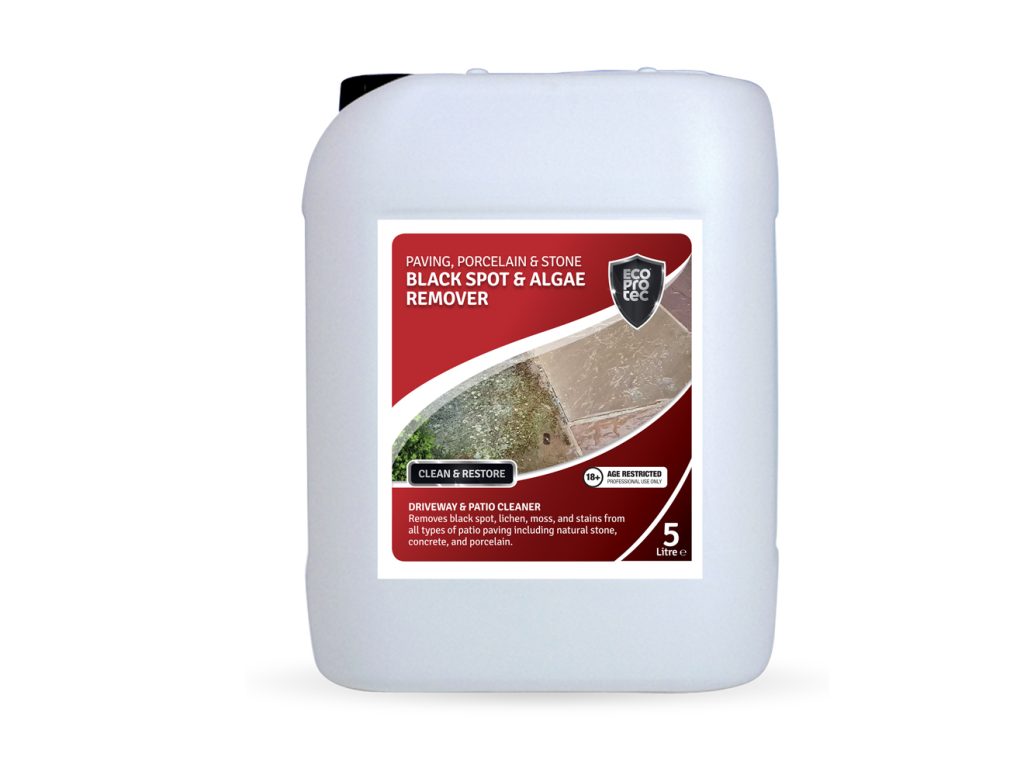
How to apply ECOPROTEC Blackspot & Algae Remover:
- Clear the area: Move all furniture, pots and other objects.
- Apply neat: Apply Blackspot onto clean pavers with a plastic watering can or light pressure garden spray.
- Let it work: Leave to absorb for 2-4 hours; the product will begin to fizz as it gets to work.
- Hose off: Wash the surface down thoroughly with clean water.
Stopping water ingress
Once your pavers are clean and dry, it’s an ideal time to replace any lost jointing sand or cement mortar. Filling these gaps will stop the ingress of water and will help protect paving from cracking during the freezing and thawing cycles of winter.
Adding long-term protection
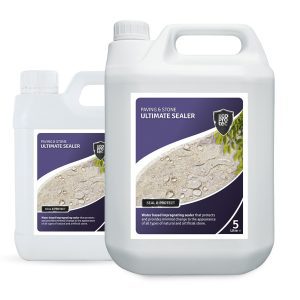
If your patio hasn’t been sealed, consider applying a high-quality protective treatment. We recommend ECOPROTEC Patio Sealer for natural stone and our new barrier treatment, ECOPROTEC Pre Grout Protection for matt porcelain pavers.


Both formulations are non-film forming and will help prevent the absorption of moisture and organic particles, reducing staining and the spread of algae, mould and black spot. Because they are water-based, they can be applied over some residual moisture. As a rule of thumb, it’s safe to apply a treatment provided that no rain is forecast for 24 hours on either side of application.
ECOPROTEC Patio Sealer: This is a water-based, impregnating sealer that’s applied using a foam roller or paint brush, as shown in the product page Video Aid. It will protect pavers from moisture, stains, weathering and efflorescence, and it’s also UV resistant and non-yellowing.
ECOPROTEC Pre Grout Protection: This creates a barrier against organic matter and makes ongoing maintenance easier. On newly laid tiles, it also protects against staining and helps increase grout working times. Here’s the product page with Video Aid.
For more advice, browse ECOPROTEC TV on YouTube, contact the ECOPROTEC team direct on 01823 662722 or email technical@ecoprotec.co.uk