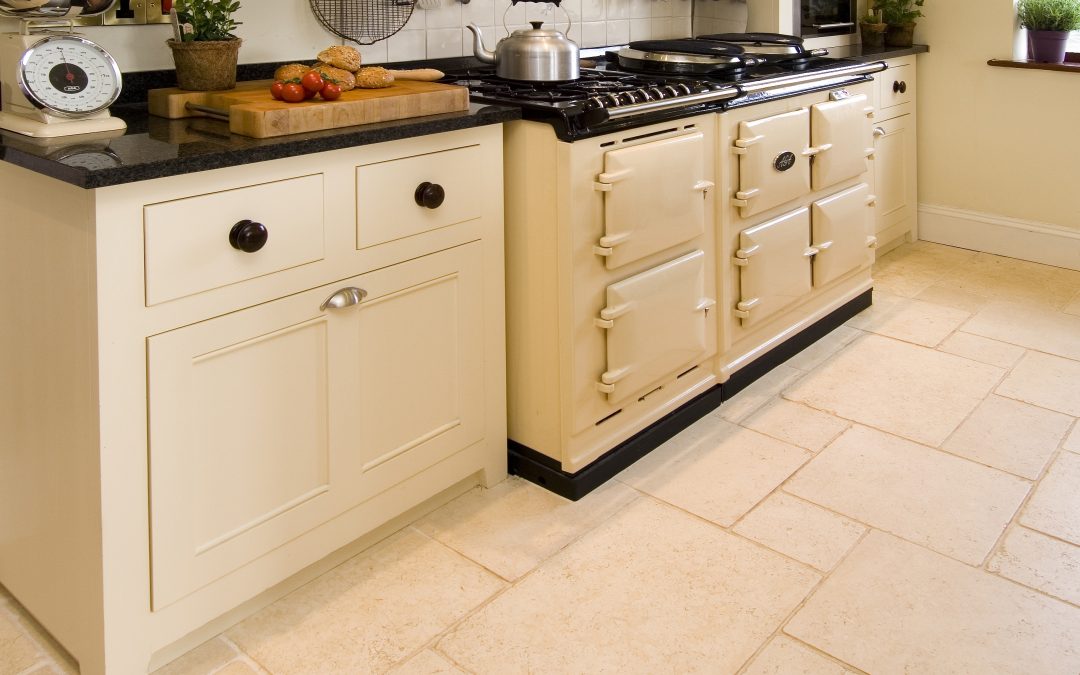
As the wetter, muddier months approach, November is an ideal time to give a stone floor some attention. With outdoor dirt and moisture more likely to be brought indoors, a deep clean and fresh application of sealer can help restore its appearance and renew protection ahead of winter. It’s also a good opportunity to address any build-up of dirt or cleaning residue before it becomes more difficult to remove.
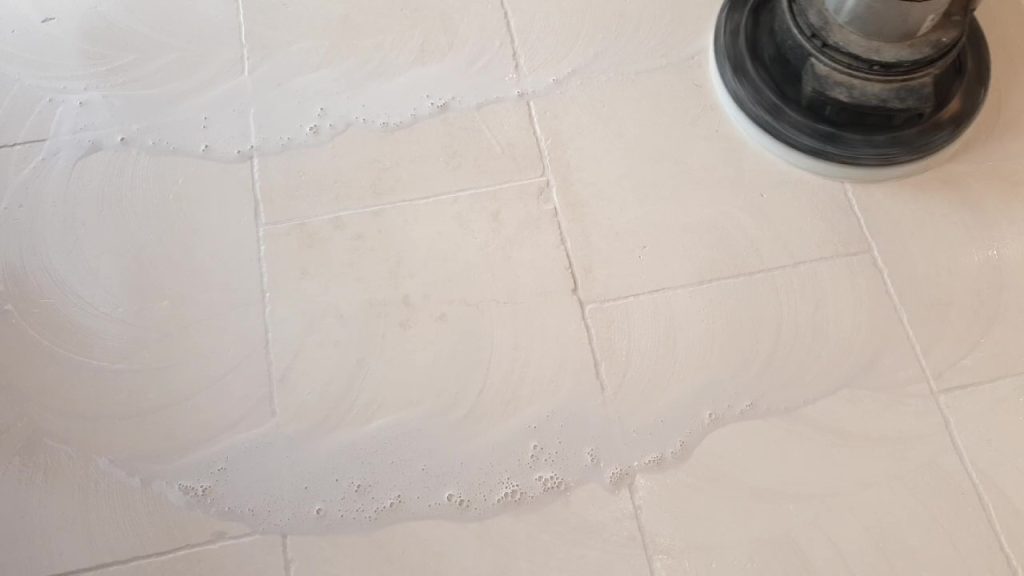
A deep clean and reseal is a straightforward procedure but one that needs to be carried out correctly. To achieve good results, we always recommend carrying out parallel-pass or lane mopping, working in parallel sections rather than tackling the whole surface in one go – and there are lots of reasons for this:
- If a large area is cleaned in one go, and the active cleaner is left too long and dries with the residue still on the surface, it will create a patchy film. The cleaner should be applied, left to act for the correct time and the residue should be removed whilst the surface is still damp.
If a deeper clean is needed, the solution is generally left to act for longer, during which time it’s reapplied so the surface is kept wet. It’s then agitated, before the residue is removed and the surface is rinsed.
- Cleaning the floor in strips allows you to gauge whether the clean has been sufficient, or if you need to use a stronger dilution, because you can see the contrast between the treated and non-treated areas.
- Having untreated sections of floor gives you a clear area to walk on, rather than stepping into wet solution.
It’s always best to carry out a test application on a small area first, allowing you to hone your technique before moving on to the wider application.
In most cases, a 1:10 dilution of ECOPROTEC Stone & Tile Intensive Cleaner provides the ideal solution for a swift clean. At this dilution, the alkalinity is sufficient to break down organic dirt, without completely stripping the floor – although a stronger dilution can be used if you need to strip the surface.
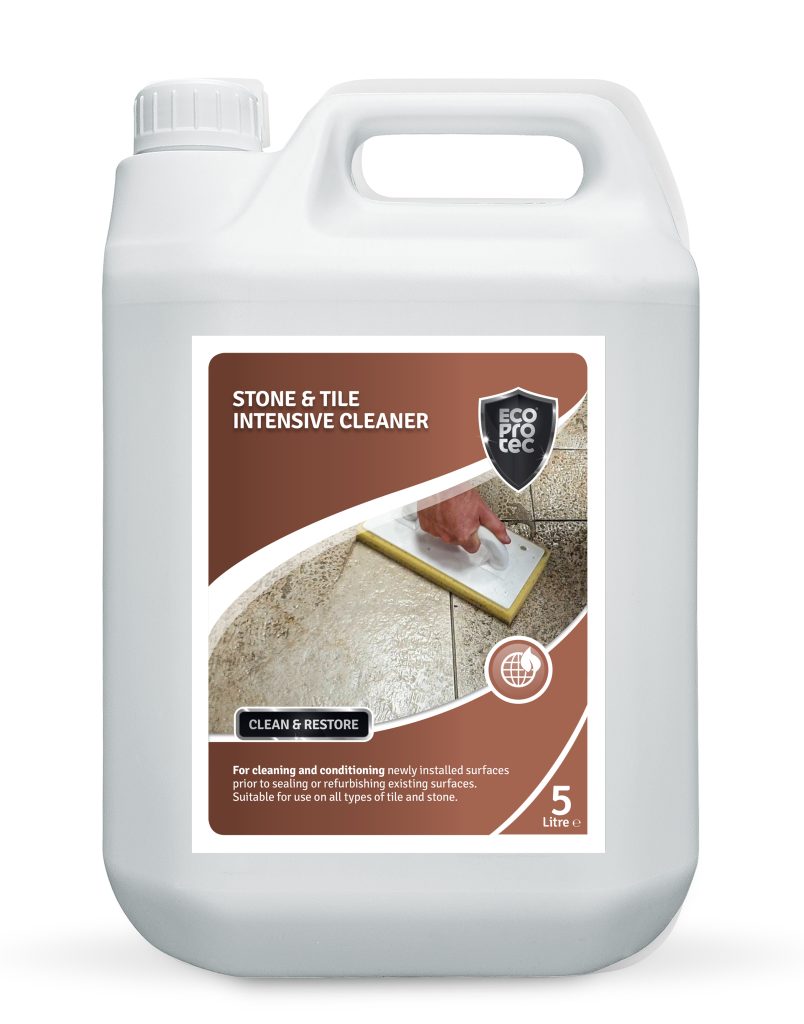
During a routine deep clean to remove mild residue, ECOPROTEC Stone & Tile Intensive Cleaner is applied as follows:
- Dilute ECOPROTEC Tile & Stone Intensive Cleaner 1:10 in warm water and apply generously without soaking the floor, spreading across the surface with a mop or cloth.
- Wipe over with a clean, damp cloth to extract residue.
For a deeper clean:
- Dilute ECOPROTEC Tile & Stone Intensive Cleaner 1:3 in warm water and apply generously as before, spreading across the surface with a mop or cloth.
- If necessary, agitate with a scrubbing brush. Leave the solution to act for 5-10 minutes, keeping the floor wet with additional solution.
- Agitate the surface again, mop up residue and rinse thoroughly with clean water.
- Wipe over with a clean, damp cloth to extract residue.
If a floor does need to be completely stripped back to remove heavy residue, ECOPROTEC Tile & Stone Intensive Cleaner can be used undiluted, and agitated with a scrubbing brush or floor cleaning machine if necessary. The floor should then be rinsed with clean water.
Topping up the protection
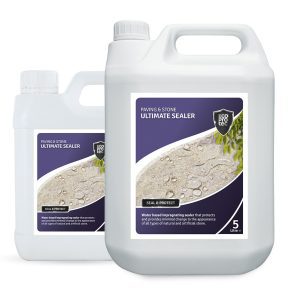
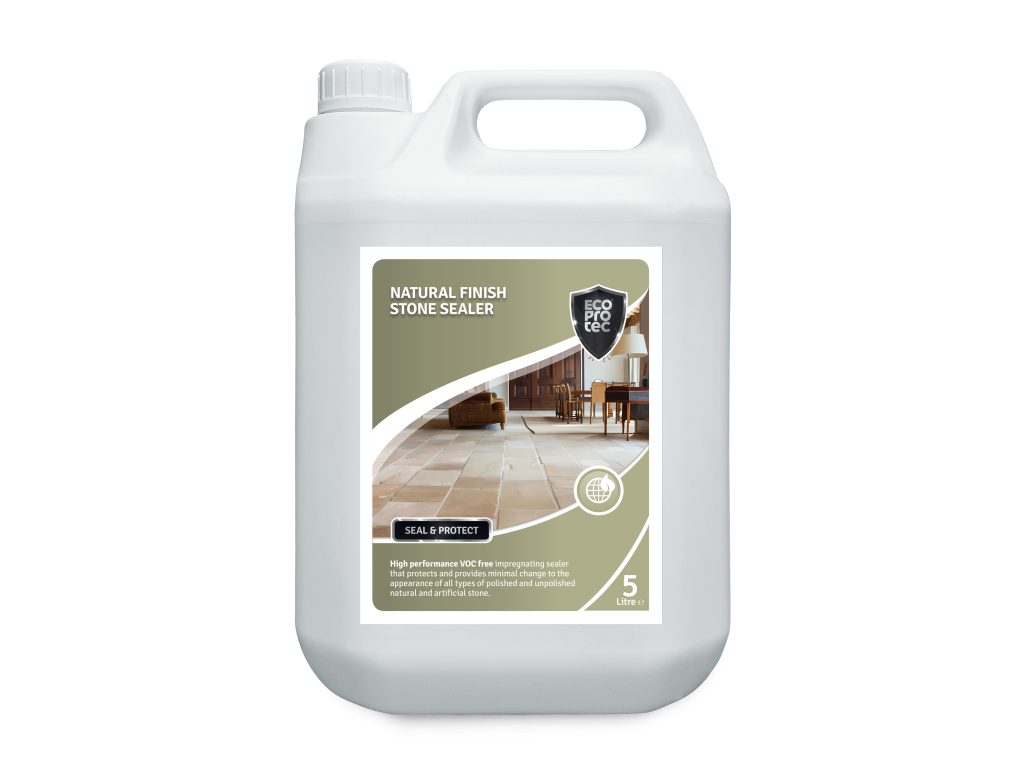
After a deep clean, the floor can be sealed again. We recommend ECOPROTEC Natural Finish Stone Sealer – a water-based sealer which can be applied to a surface that is still slightly damp.
For rough cut, tumbled, textured and riven surfaces:
- Apply the sealer generously and evenly with a paintbrush, sponge or foam roller.
- After one hour, remove any excess with a lint-free absorbent towel. Further coats can be applied at hourly intervals until the surface is fully saturated, if required.
- Leave to dry. Once fully absorbed and the surface is no longer wet, light traffic is permitted.
For smooth, honed surfaces:
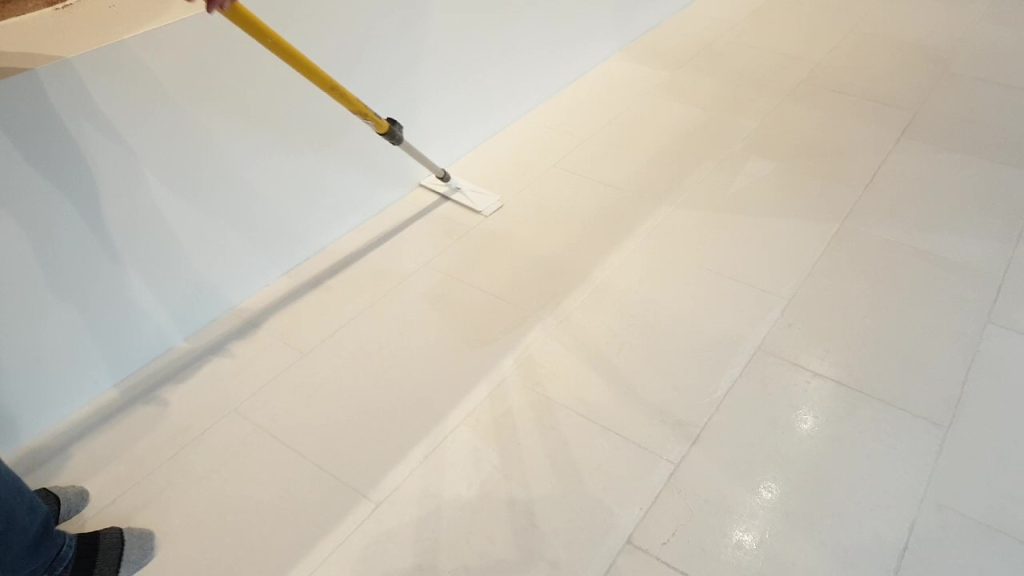
- Apply the sealer evenly with a sealant applicator, paintbrush or sponge. If more than one coat is needed, apply further coats as soon as the first has been absorbed using a ‘wet on wet’ application. The surface is sufficiently sealed when no further sealer is absorbed and the surface has an even appearance.
- Remove any residual sealer after one hour by rubbing with a dry, micro-fibre cloth.
- Leave to dry. Once fully absorbed and the surface is no longer wet, light traffic is permitted.
Ongoing maintenance
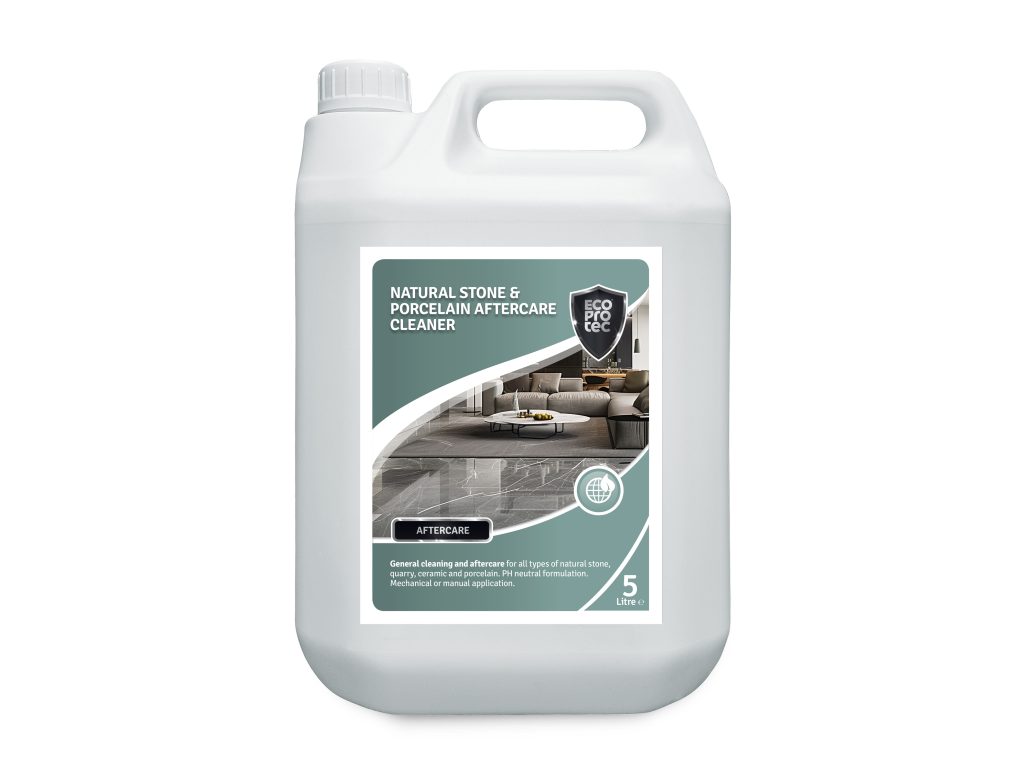
Stone floors should always be cleaned with a pH-neutral solution, to protect the stone surface and the protective sealer. We recommend ECOPROTEC Natural Stone & Porcelain Aftercare Cleaner – a no-rinse cleaner. Simply add 2- 3 capfuls of cleaner to a bucket of warm water (approx. 5 litres), mop surfaces and leave to dry naturally.
How will I know if my floor needs refurbishing
A floor that needs a deep clean and reseal will generally become more difficult to clean. It may become slippery if residue is allowed to build up and a surface film may appear across the whole surface or in patches. Often, a thorough clean will be sufficient to remove the residue, but most floors will need a top up of protection every 3-5 years, depending on wear and tear.
Sealer doesn’t disappear over time; foot traffic, cleaning and abrasion gradually wear the protection and expose new capillaries in the surface, which can then take on dirt and grime.
A good way to test if a stone floor needs to be resealed is to carry out a Water Drop Test: Clean the tile to remove dust and dirt, then drop a bead of water onto the surface. If it sits in place, the stone is well sealed. If the water quickly soaks into the tile or makes the surface look darker it needs resealing.
For further information, browse ECOPROTEC TV on YouTube or contact the ECOPROTEC team direct on 01823 662722 or email technical@ecoprotec.co.uk