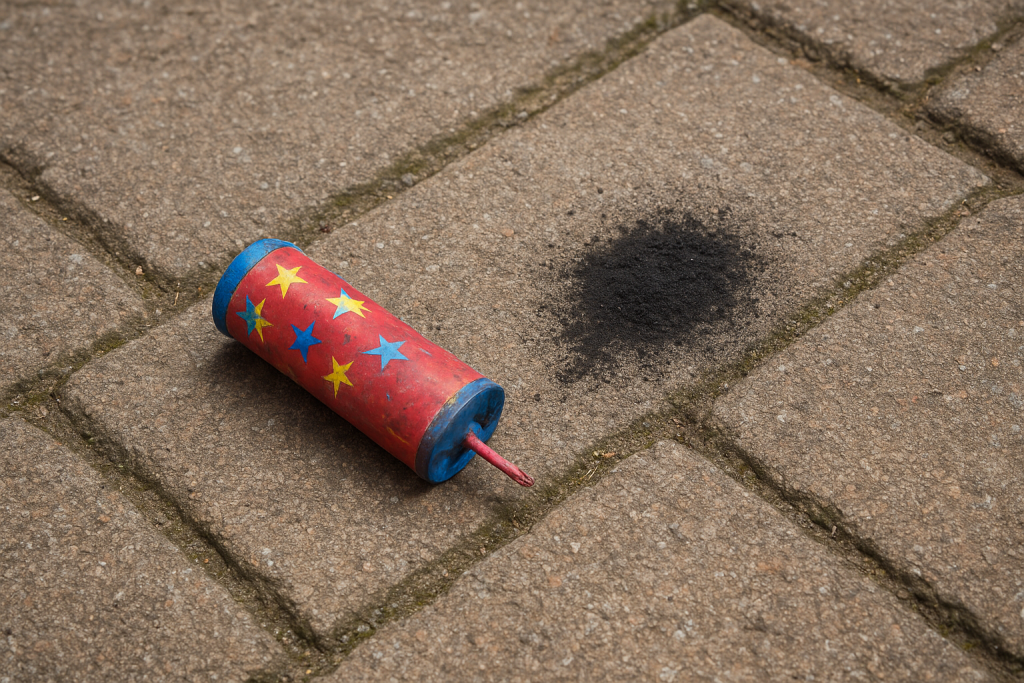
Bonfire Night can leave a variety of residues on outdoor paving, some of which can cause stubborn staining and be difficult to remove. Alongside more familiar contaminants such as food, drink, wax and grease, fireworks can introduce soot, metallic particles, mineral deposits and chemical residues to the surface. These can present particular challenges when cleaning natural stone, as different types of staining require different treatment methods and cleaning solutions.
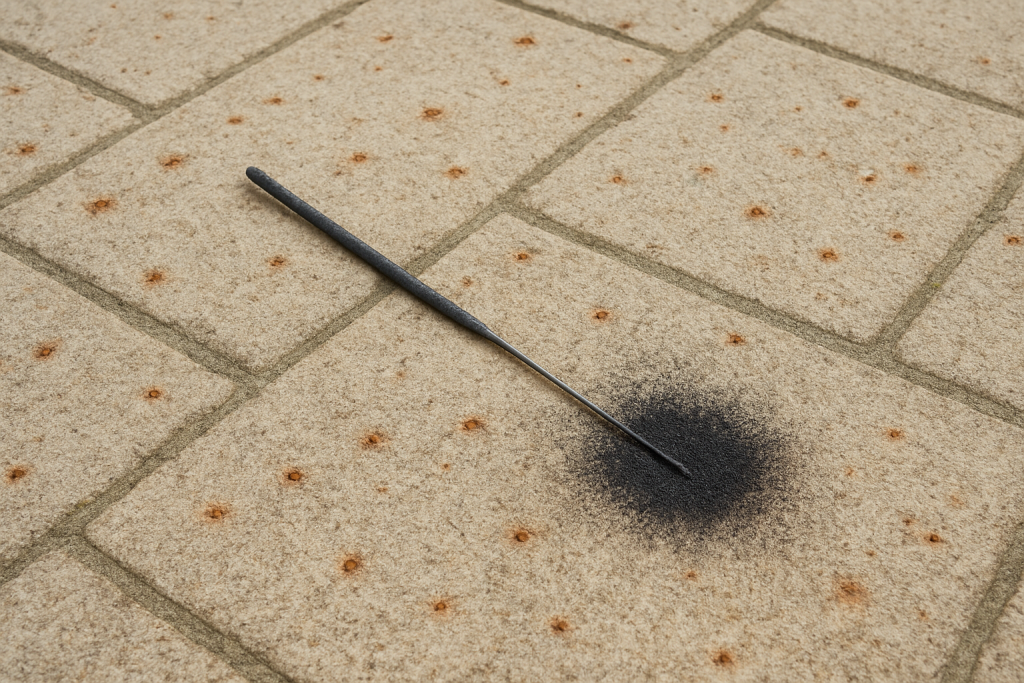
Black soot stains from gunpowder are a major bugbear, as are rust-type stains caused by iron filings used to create gold sparks. Residue from some fireworks can also contain salts, which may leave behind a powdery deposit known as efflorescence.
There is also a whole spectrum of coloured marks that can result from the mineral elements used in fireworks. Barium produces bright greens; strontium creates deep reds; copper produces blues; and sodium yields yellow. Other combinations of these elements can produce orange, silver and purple effects.
What not to do
Unsurprisingly, most online searches throw up the usual advice to use bleach-based or acidic cleaners to tackle these stains. However, this is not recommended, particularly when dealing with acid-sensitive natural stone.
Materials like travertine and limestone are vulnerable to strong acids and corrosive alkaline solutions, such as bleach. Both can erode the surface and damage any protective sealer that’s been applied.
How to remove stains safely
When applying an ECOPROTEC cleaner or stain-removing solution, always wear gloves and follow the product instructions carefully. Children and pets should be kept away from the treatment area until paving has dried. If any product runs off onto surrounding grass or plants, dilute it with plenty of water.
Black soot & most coloured stains
ECOPROTEC Intensive Cleaner will safely and effectively remove most stains from stone and porcelain, including organic residue, wax, grease, soot and many mineral-based marks.
For mild stains, use a 1:10 dilution, apply the cleaner with a cloth or mop and then rinse with clean water.

For more severe staining, use a 1:3 dilution, agitate the tiles with a scrubbing brush, leave the solution for 5-10 minutes – keeping tiles wet with additional solution – and agitate again, before rinsing with clean water. ECOPROTEC Intensive Cleaner can also be applied neat in severe cases, and after a suitability test.
Rust stains from iron fillings
For these stains, we recommend ECOPROTEC Rust Stain Remover – a non-caustic solution that’s designed to tackle rust staining and safe to use on all surfaces.
First, wash the area with a 1:10 diluted solution of ECOPROTEC Intensive Cleaner. Then, cover the stain with undiluted ECOPROTEC Rust Stain Remover and leave it to act for 15 minutes. The product colour will change to a deep purple as it reacts with the rust. Then, remove the residue and rinse with clean water. Repeat application until the stain is completely removed.
Salt marks and efflorescence
To safely remove white stains for unpolished natural stone, we recommend ECOPROTEC Cement, Grout & Salt Residue Remover . Once again, the treatment is applied neat and should be agitated immediately with a black emulsifying pad. Then, rinse with clean water and remove the released deposits with a sponge, before rinsing again. Repeat application until the stain is completely removed.


Stubborn wax residue
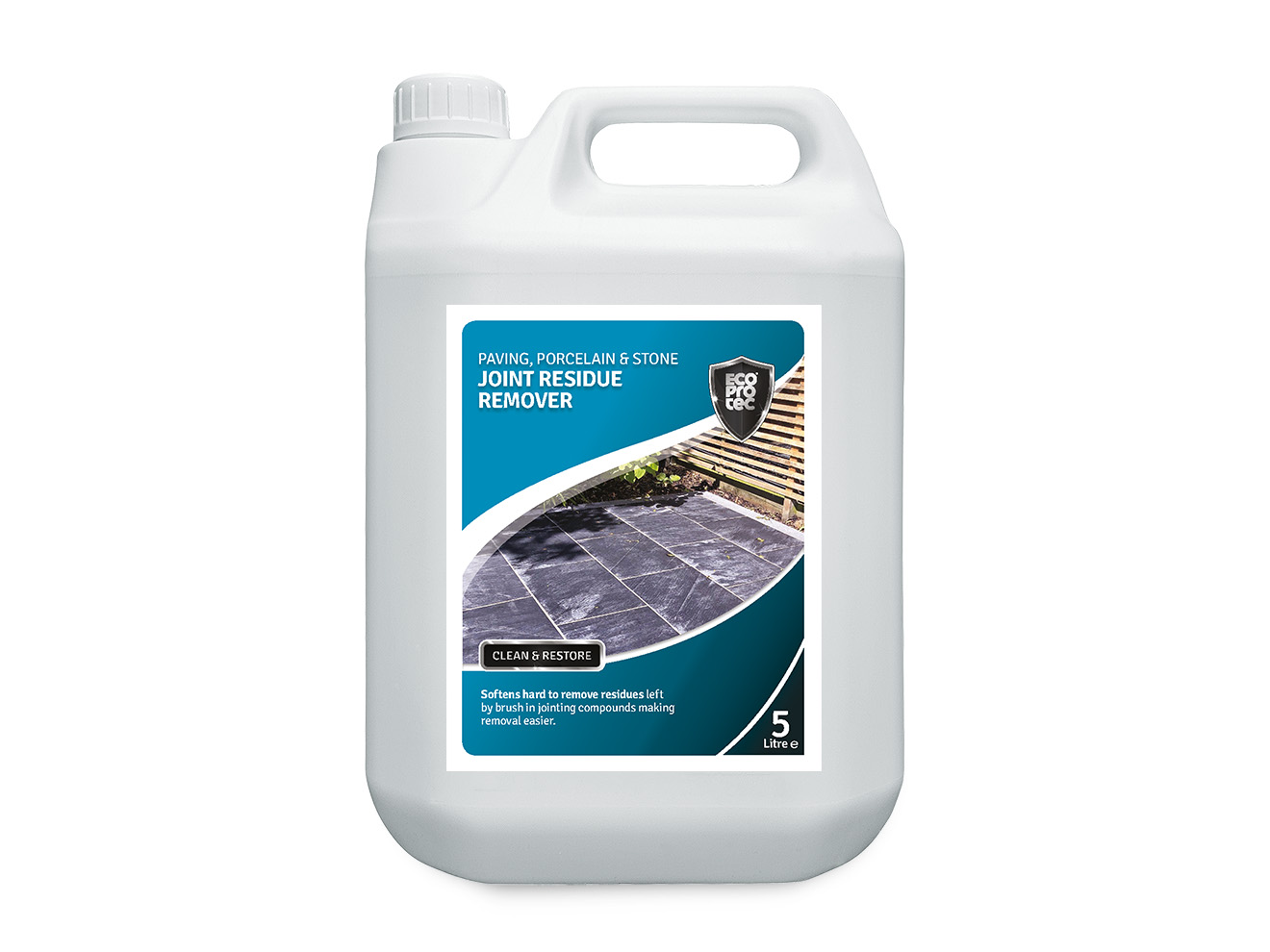
For severe wax residue and paint stains, we recommend ECOPROTEC Joint Residue Remover – a non-caustic remover suitable for all surfaces.
Here, apply the solution neat, generously dabbing it onto the stains with a cloth or brush. Work in manageable areas – as far as you can reach without treading into the solution. Leave it to react for up to 30 minutes, applying more solution if it starts to dry out. Using a coarse, stiff brush or a black emulsifying pad lift the softened residue from the surface. Repeat if any staining remains. Finally, rinse the tiles with ECOPROTEC Intensive Cleaner diluted at 1:3, applied with a cloth, mop or brush, and then give the surface a final rinse with clean water.
Topping up protection
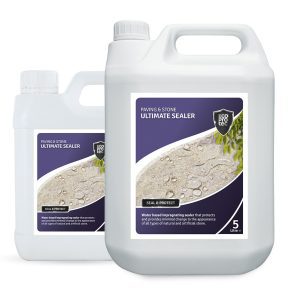
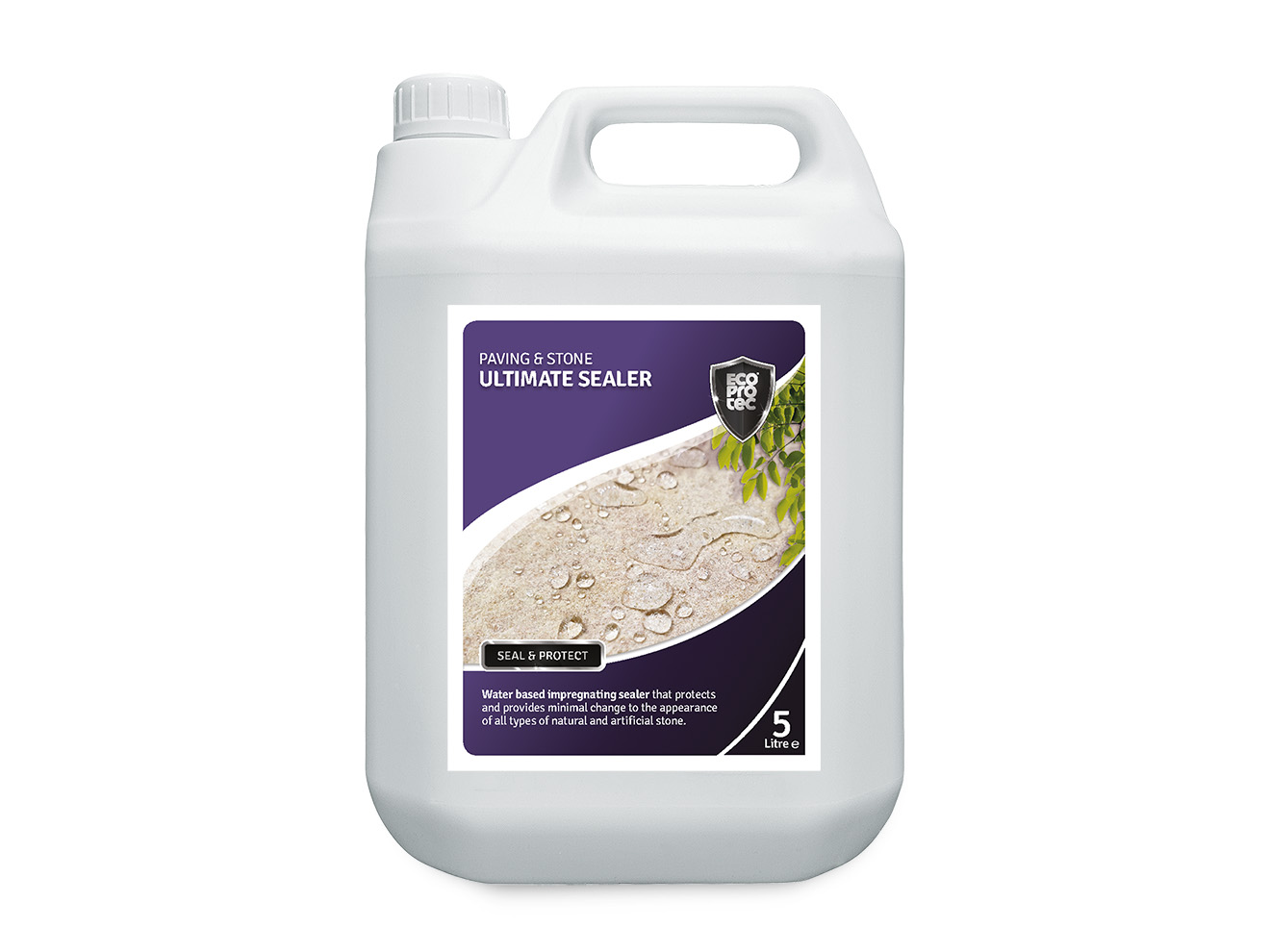
If the surface sealer on your tiles is worn or quite old, it’s worth applying a new coat after removing stains, to top up the protection. This can be carried out once the surface is sufficiently dry; this may take a minimum of 24 hours. We recommend ECOPROTEC Ultimate Sealer for natural stone and barrier treatment, ECOPROTEC Pre Grout Protection for matt porcelain pavers.

For further information, browse ECOPROTEC TV on YouTube or contact the ECOPROTEC team direct on 01823 662722 or email technical@ecoprotec.co.uk