When we think about algae build-up, paths, patios, steps and driveways are usually the first areas that come to mind. Slippery organic residue on these surfaces can create a genuine safety risk. However, algae and other forms of organic growth are not restricted to floors. Walls, garden features, statues and other ornamental objects can also suffer from unwanted growth, particularly where surfaces are exposed to shade and moisture.
Although algae growing on these surfaces may not create the same slip risk, it can still have a significant impact on their appearance. As with paving, pressure washing alone is not always the answer. While it may remove visible growth, it may not deal with the organic matter that has become established beneath the surface, meaning the problem can return.
What is algae?
Algae is an organic film or deposit that flourishes in damp places. Moss, flat green liverwort and crusty lichen are classed as algae but it tends to be jelly-like growths and black spot that cause the most issues.
Jelly-like algae tends to be black or dark green and is caused by a cyanobacteria called Nostoc. Black spot is a lichen that originates from plants and trees. It colonises surfaces, sending tendrils or ‘hyphae’ down into any nooks and crannies as it searches for nutrients. Over time, it can become established below the surface and create a slippery residue.
In terms of removal, a pressure washer and household cleaner may seem like an obvious solution, but excessive water can create the damp conditions that encourage organic growth, while pressure washing – and harsh detergents – can damage the surface of the pavers, affect any sealer applied and loosen grout. Pressure washing the surface won’t necessarily remove the hyphae or filaments that have become anchored below it. Also, If the surface of the stone is degraded, it can open up capillaries, creating further opportunities for lichen and black spot to become established.
For a more effective and longer-lasting treatment, a specialist approach is needed to remove residue, target growth below the surface and help reduce the risk of re-growth. This is just as important when treating walls and ornamental surfaces as it is for floors, patios and other paved areas.
How to remove algae safely
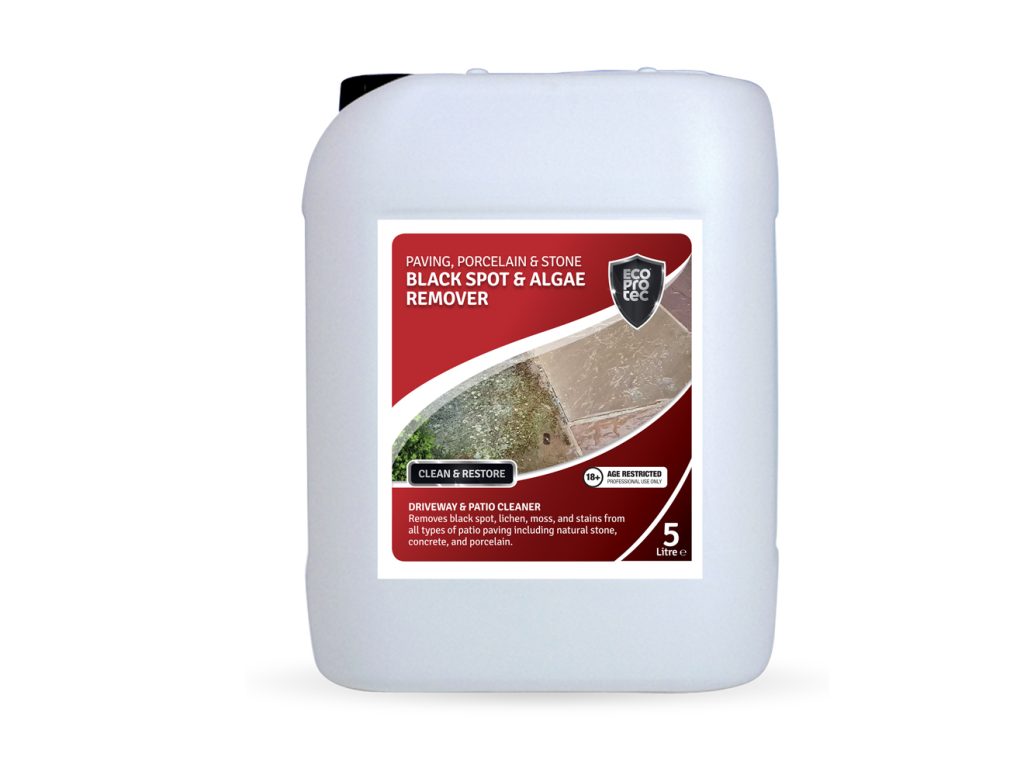
Care should be taken when choosing a suitable product to remove algae. If it’s an acid-based brick or paving-type cleaner, it may damage acid-sensitive stone and erode the grout joint. We recommend ECOPROTEC Black Spot & Algae Remover which can be safely used on all types of natural stone, concrete, brick and porcelain. This treatment removes all types of organic residue, slippery matter and stains, breaking down hyphae below the surface, as well as preventing regrowth. When applying the Remover, it’s also important to treat the whole area to achieve an even appearance.
How to use ECOPROTEC Black Spot & Algae Remover
Before treating a wall area or ornamental surface, any large, mossy deposits should be removed with a stiff brush. The surface should then be brushed to remove all residue.
ECOPROTEC Black Spot & Algae Remover is then applied neat to the prepared surface, using a brush or light pressure garden spray, where it fizzes during treatment. It should be left to act for 2-4 hours and the surfaces then hosed with clean water. The solution can be used on dry and slightly damp surfaces and should be applied during a morning or afternoon of fair weather. See a video aid on the product page.

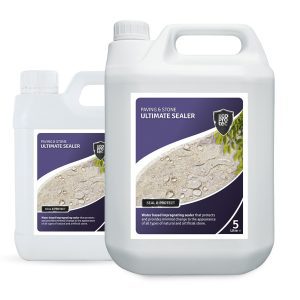
After treatment, it’s worth protecting the surface; we recommend ECOPROTEC Ultimate Sealer which will help prevent the absorption of moisture and organic particles, reducing staining and the spread of algae.

For more advice, browse ECOPROTEC TV on YouTube, contact the ECOPROTEC team direct on 01823 662722 or email technical@ecoprotec.co.uk