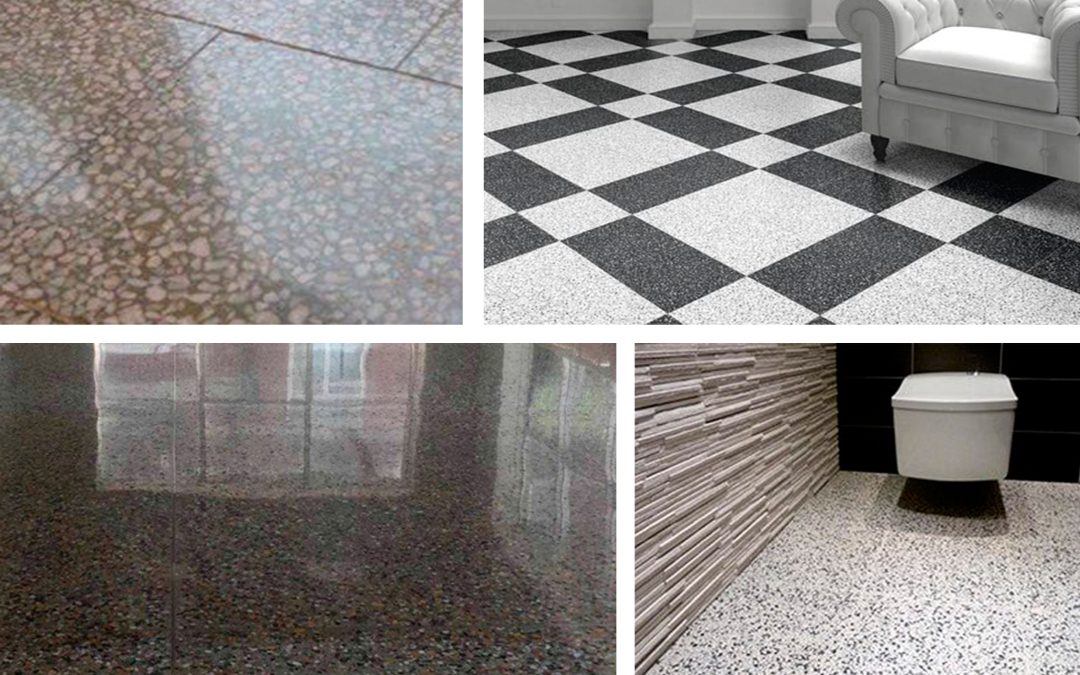
With their endless design possibilities and unmistakable Italian heritage, terrazzo tiles have become a firm favourite for stylish interiors. The tiles’ distinct mix of colour and aggregate offers a welcome alternative to the muted greige palette that has dominated in recent years. But while terrazzo is both beautiful and hard-wearing, keeping it looking its best does require a little care. The right cleaning and maintenance routine will help preserve its distinctive finish, as well as its practical benefits.
What is terrazzo
Terrazzo tiles combine pieces of marble, stone, glass and aggregates, with a cementitious or resin binder. Cement-based terrazzo is the most porous of the two and can absorb water, oils and stains more readily. The aggregate within the surface can also influence its absorbency and performance. The finish is also important: polished, honed and textured tiles all require slightly different maintenance approaches.
Protecting terrazzo tiles
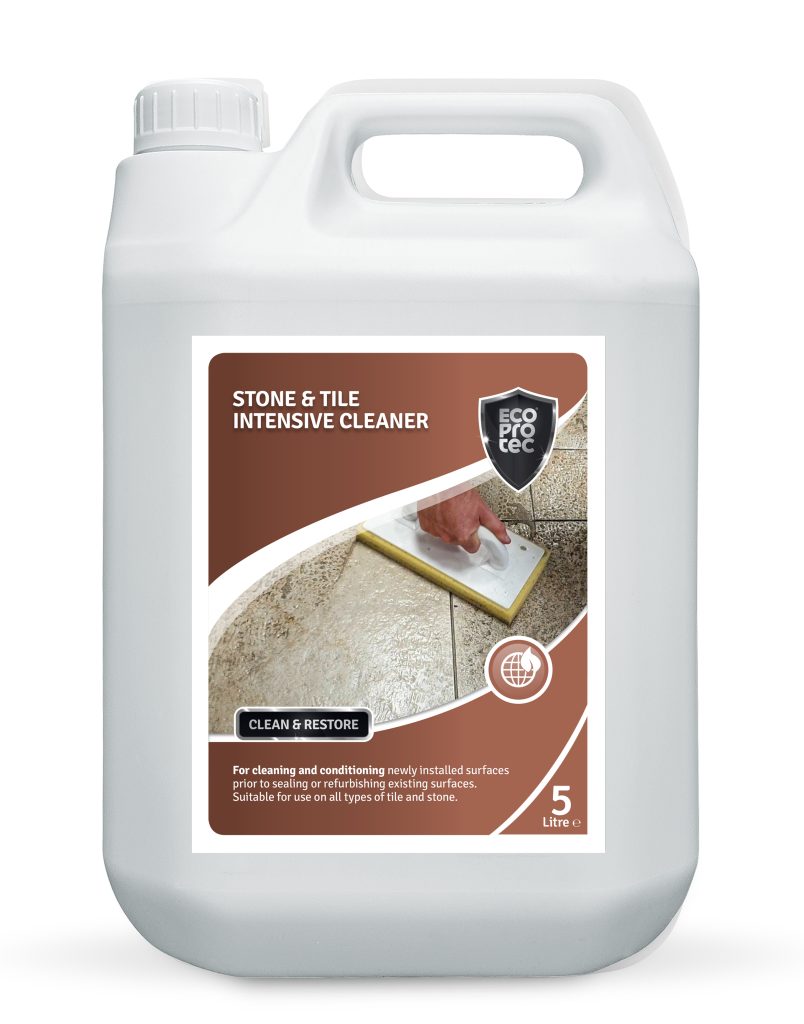
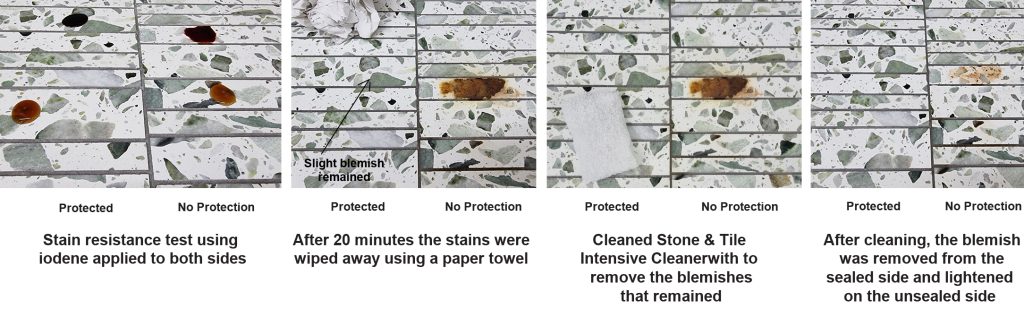
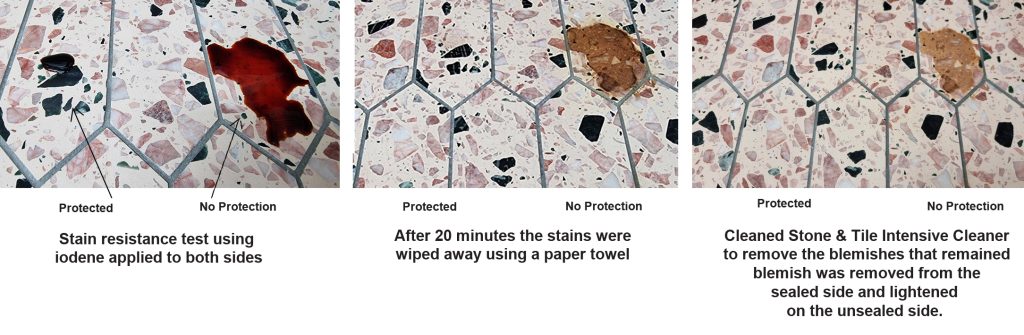
Terrazzo tiles need to be sealed before and after grouting to protect them from stains. Before sealing, tiles should be thoroughly cleaned to condition them; this will remove any factory residue and general dirt. We recommend ECOPROTEC Stone & Tile Intensive Cleaner. A 1:5 dilution should be used; apply to the surface and gently agitate using a white nylon pad or microfibre cloth and leave to dry. Polished surfaces may need a light buff using a dry microfibre cloth to remove excess moisture before leaving the tiles to dry.
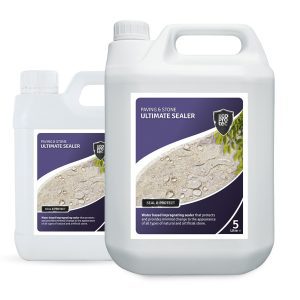
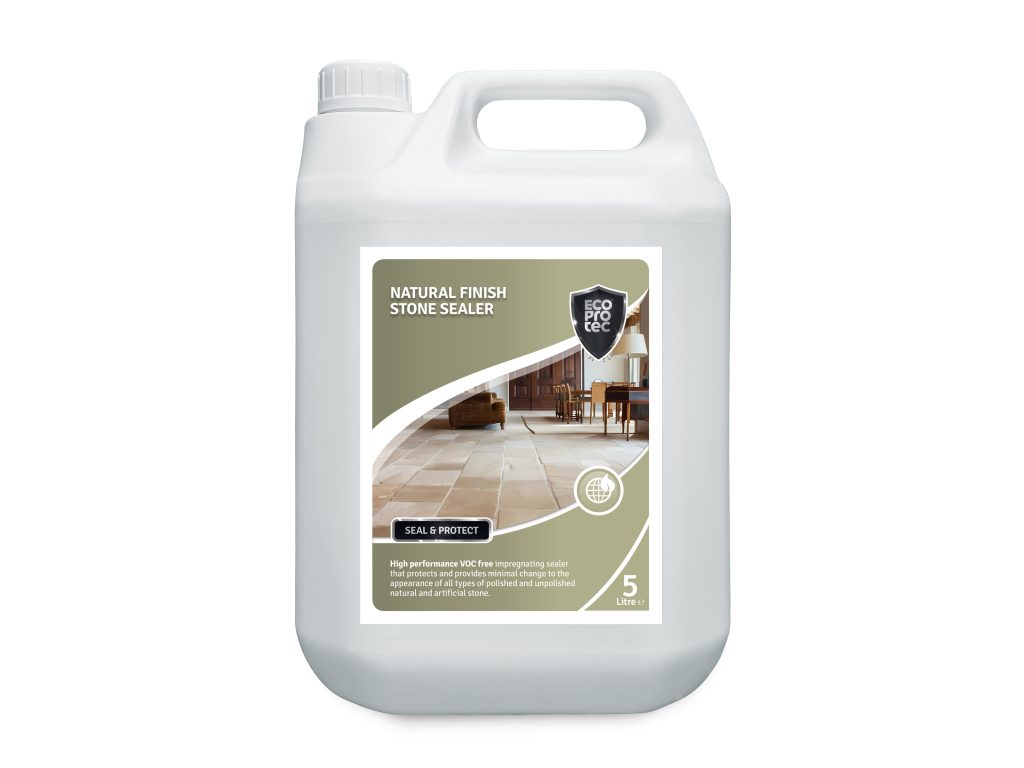
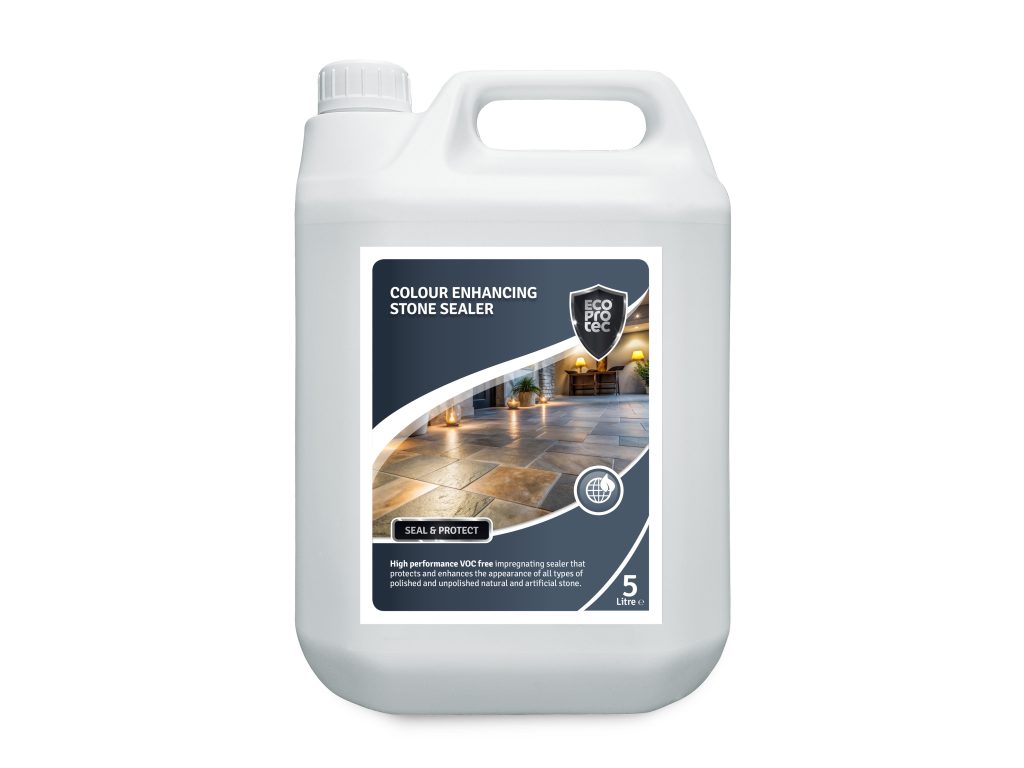
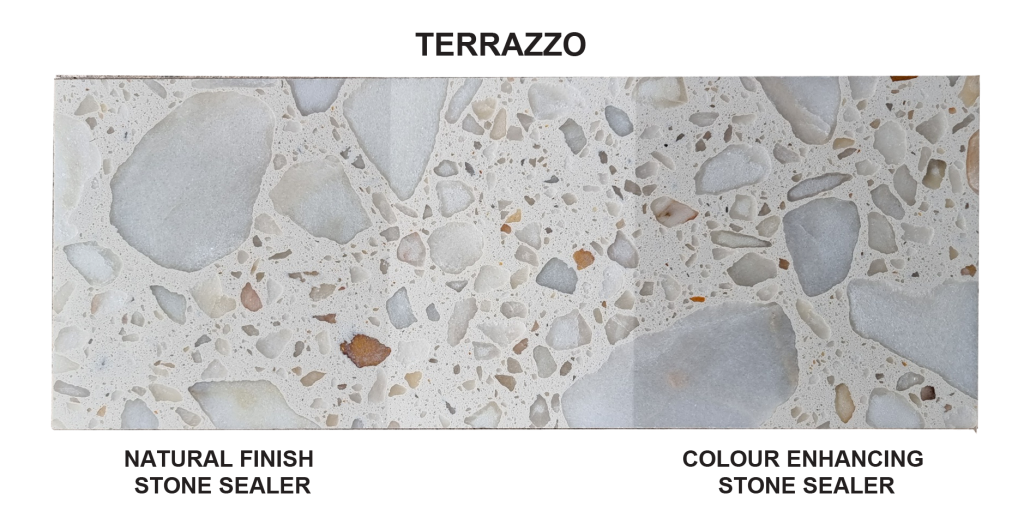
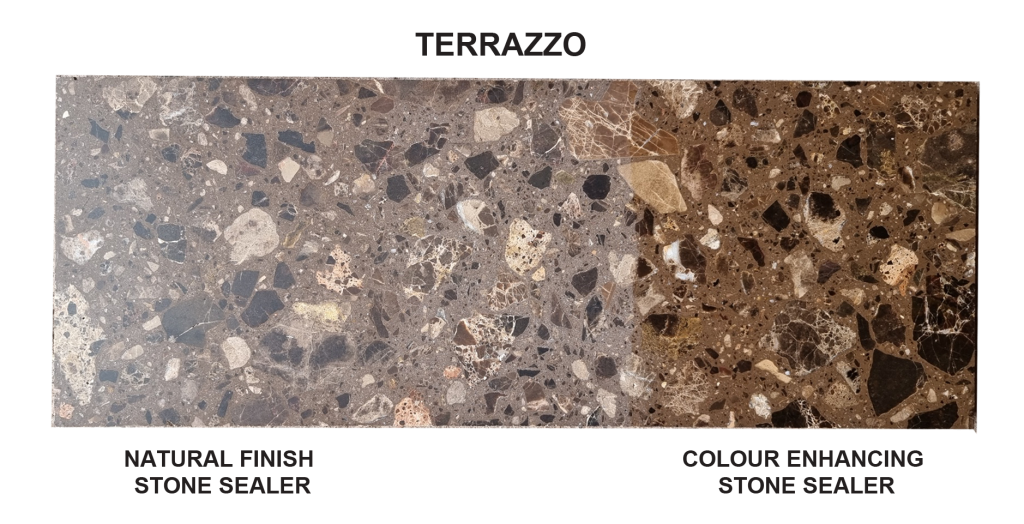
To protect the tiles, we recommend using either ECOPROTEC Natural Finish Stone Sealer – a water-based impregnator that protects without changing appearance, or ECOPROTEC Colour Enhancing Stone Sealer – also a water-based impregnator but one that enhances the tile’s colour variation and the tone of the tile’s aggregate element. These sealers offer equal performance to their spirit-based solvent equivalents and provide a safe, environmentally friendly option. Water-based treatments can also be applied over some residual moisture, so they speed up application times.
Be careful not to apply too much sealer. Any excess product that’s left to dry on the surface can leave visible residue, particularly on polished or darker terrazzo tiles. If you do decide to use a spirit-based solvent protector, ensure that the floor is properly dry before application; any trapped moisture under the sealer can, once again, create a patchy finish. The ECOPROTEC sealers should be applied to the point of saturation and any visible residue should be wiped off after 30 minutes.
A good maintenance regime
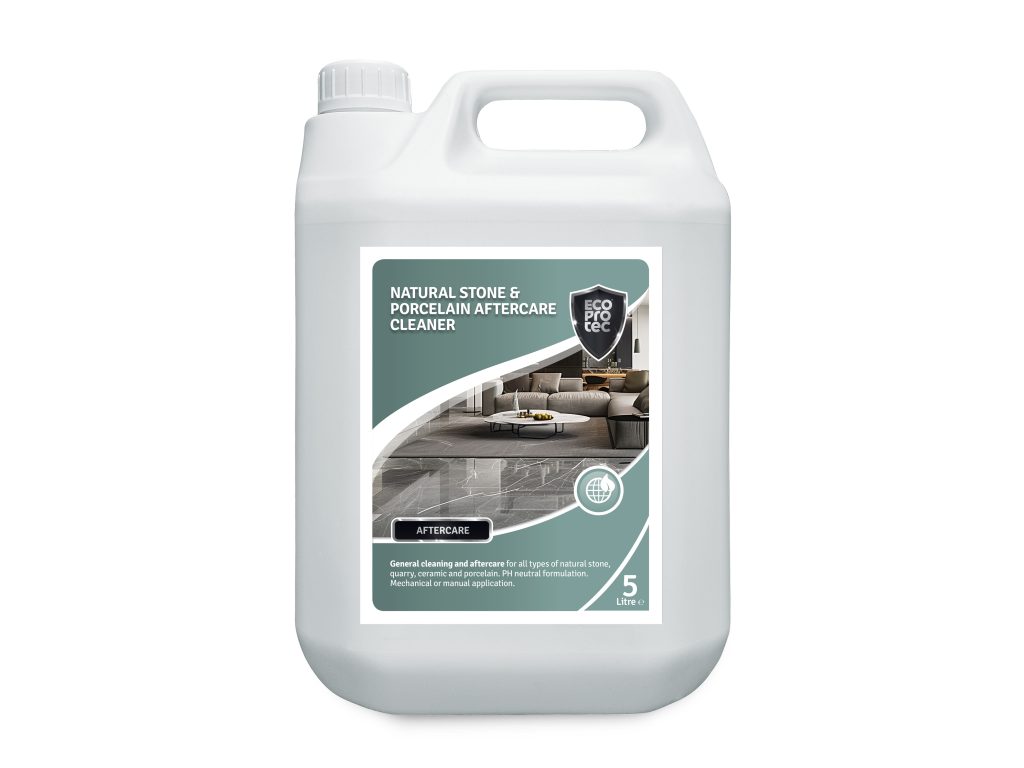
Once sealed, terrazzo tiles should be maintained with a pH neutral cleaner, like ECOPROTEC Natural Stone & Porcelain Aftercare Cleaner. Aggressive household detergents and acidic products should be avoided. These could damage the sealer and the floor; some aggregates are very sensitive to acids.
When should terrazzo be resealed
There’s no definitive timetable in terms of resealing tiles, as it depends on the level of foot traffic and maintenance. However, the water bead test can be really useful:
- Clean the tiles to remove dust and dirt, then drop a bead of water onto the surface. If it sits in place, the tile is well sealed. If the water quickly soaks into the tile or makes the surface look darker it needs resealing.
The very best results come from treating sealing and maintenance as part of the terrazzo tile installation process, rather than as an afterthought. Get the preparation right, use the correct sealer and establish a good maintenance regime from day one. This will help preserve the appearance and performance of the terrazzo tiles for years to come.
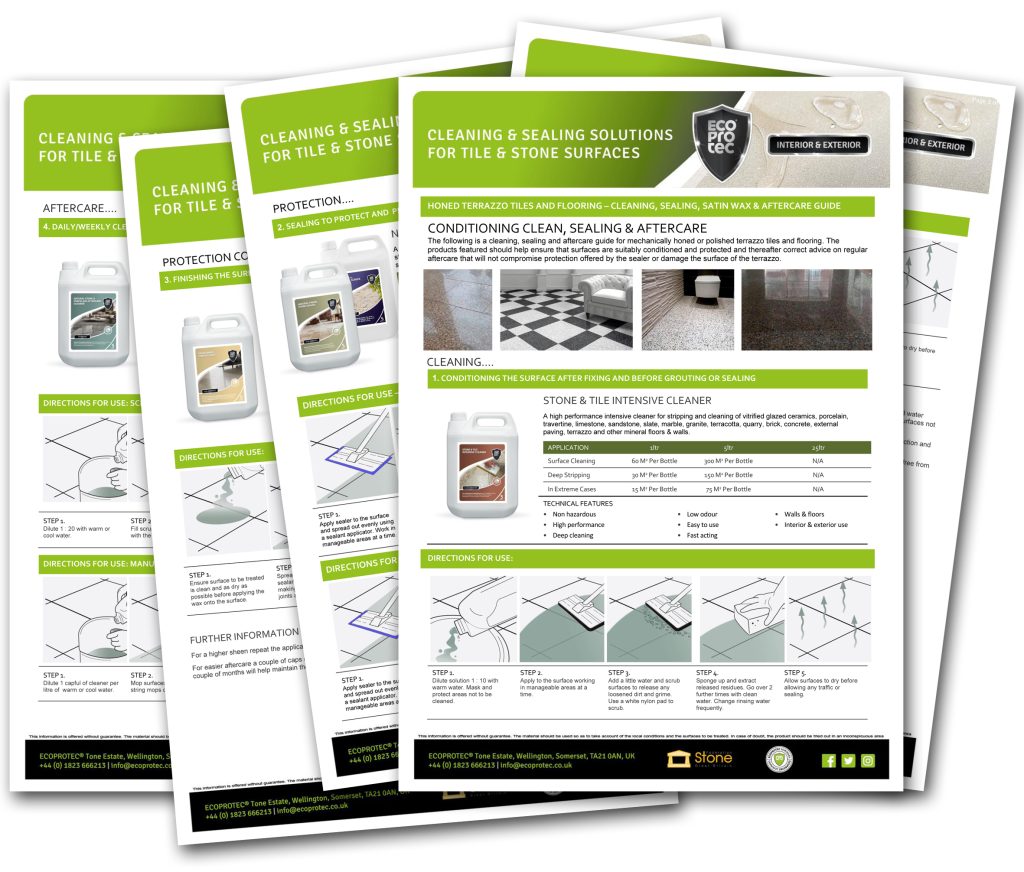
For more advice, browse ECOPROTEC TV on YouTube, contact the ECOPROTEC team direct on 01823 662722 or email technical@ecoprotec.co.uk